Art & culture · Forma
The growing global visibility of South Asian art
The progressive rise of South Asian artists in the Art world and what it means for the future of artists.
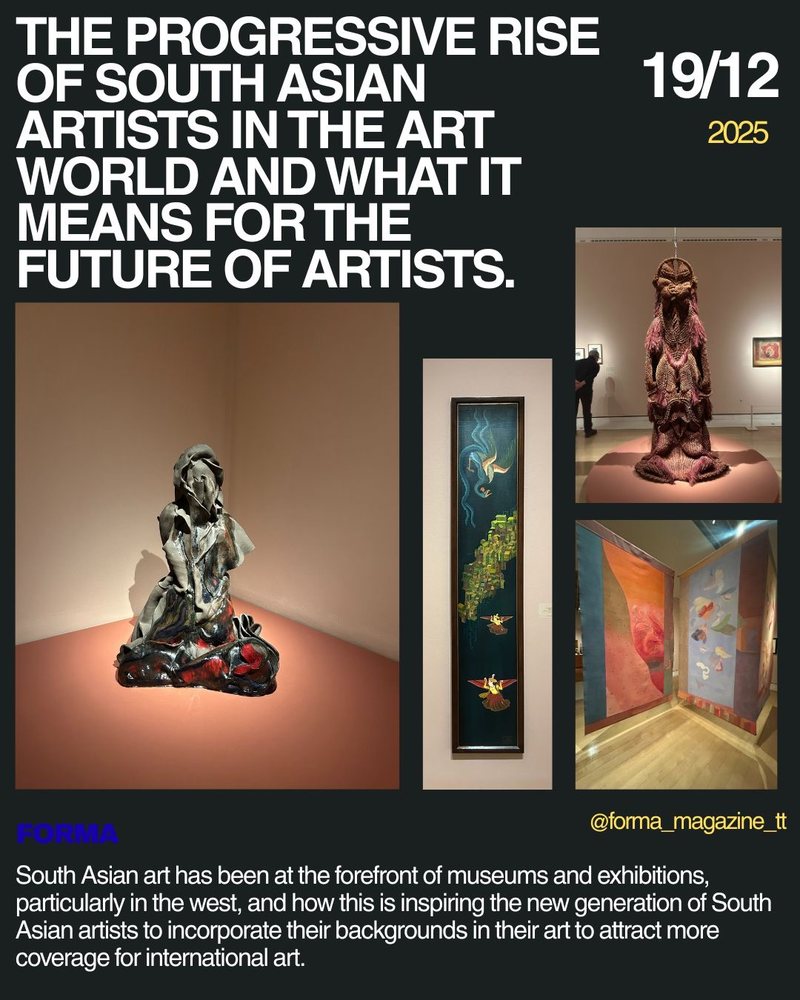
Recently, south Asian art has been at the forefront of museums and exhibitions, particularly in the west.
This has enabled emerging South Asian artists to incorporate their backgrounds in their art to attract more coverage for international art.
South Asian artists have been navigating their way through the art world in a culture where success is measured by academic success and a push towards STEM subjects.
However, more recently, there has been an uprise in dedicated South Asian artists who have been able to push past this narrative and use it to inspire the future of Art for generations to come.
This year alone, success in South Asian art can be measured by the prosperity of western art shows presenting their solely South Asian artworks for buyers and art collectors to invest into.
In March, M.F Hussain’s 1954 painting ‘Untitled’ (Gram Yatra), at Christie’s New York show made headlines when it fetched $13.8 million in a South Asian Modern and contemporary art sale.
It was the first time an Indian Modern artwork has achieved trophy status selling for over $10 million.
Within the same week Sotheby’s pulled in $16.9 million at its own South Asian modern and contemporary art sale, more than tripling its presale low estimate.
The art boom has not only increased the credibility for creatives, but it has also given their governments more incentive to invest in art schools.
Due to evolving cultural policy in India, Ministry of Culture art funding has reached more communities and independent creators.
The government art grant schemes India are vital for artists who want to sustain their practice, share their culture, and take their work to larger audiences.
Through expanded Ministry of Culture art funding, artists across India now have the tools to continue their creative journey without financial roadblocks.
These grants symbolise the nation’s trust in its artists and reaffirm that culture is now a national priority.
When speaking to this generation’s future of South Asian artists, I came across a talented young woman Isha Mang who speaks about her experience as a Punjabi artist.
Her inspiration for art came from her dad who would show her his drawings when she was younger.
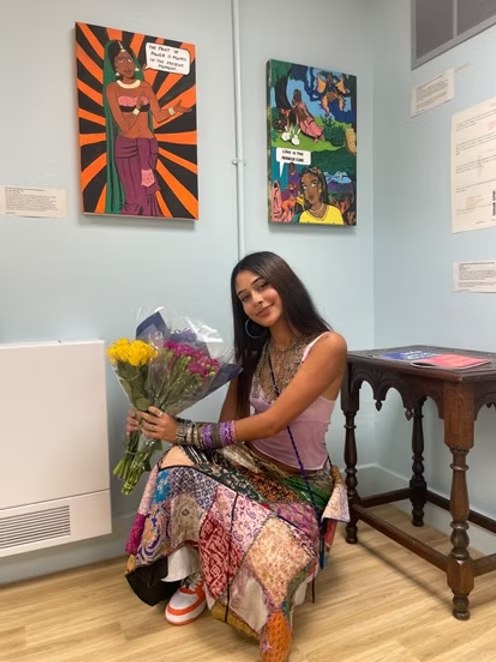
‘My background has shaped my work, because I think a lot of it stems from when I was younger, feeling like I didn’t have a lot of representation’,
In one of her projects, Isha created a google document with questions to better understand how other South Asians felt represented.
‘It was really sad, answers of people feeling like very insecure about their background and being made fun of. So, I kind of like using my work to uplift people.’
'There has been an increase in South Asian artists being platformed in the UK', says Isha, she has seen a shift in cultural art since the Black Lives Matter movement, where she felt like galleries are putting in more effort to represent a variety of cultures.
Recently, artist Arpita Singh featured in the Serpentine Gallery in Hyde Park, as well as the Mrinalini Mukherjee exhibition at the Royal Academy of Arts in Piccadilly.
These artists featured in art shows dedicated to South Asian artists, creating a collective identity for them.
Other artists like Athen Kardashian & Nina Mhach Durban who describe their experiences being raised by Indian mothers in London, have featured at the Soup gallery in Elephant and Castle with their Y2K kitsch style.
South Asian representation has been advancing in the UK alone signifying a strong exposure of South Asian art in the UK’s art capital.
We can only hope that in gaining traction, there will be more space created for South Asian art in order for the preservation of South Asia's rich history and economy for the years to come.