Sport feature · Forma
Is it harder to become successful in combat sports for women?
Women are headlining more big events, but a Brazilian Jiu-Jitsu athlete explains the tougher road in training, sparring partners and investment.
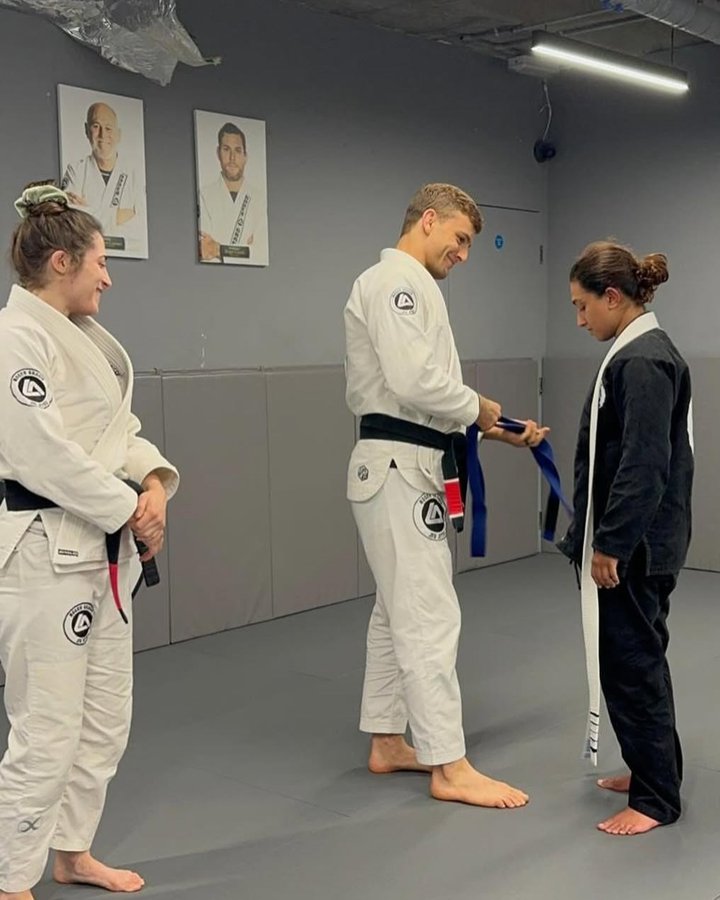
Women have been headlining major sporting events more than ever, and journalists have been enthused by the thrill that women add to combat sports.
Training can be more vigorous for women, but they have shown up in sold-out boxing rings and notable successes in women's MMA.
Most stories about female fighters continue to focus on the fights, but we can delve into the hard-work and discipline it takes for women to enter the sporting industry.
A look into the personal experiences of these female fighters will hopefully provide some aid in today’s sporting society where women are finding it increasingly harder to find other female opponents for fairer fights.
Many women favour exercise at their local gym and started training for combat sports after feeling unsafe in their environments, with domestic violence facing a staggering increase.
There is hope that we see more women train in combat sports recreationally and not solely as a form of self-defence.
Brazilian Jujitsu athlete Zainab Bux shares her personal experience on being a woman in her combat sport and how she has struggled in her career.
From her drills to fighting in competitions out on the mats, she has been disregarded for her sheer talent and strength.
‘Most [men] underestimate my physical capability. But I always like to assure them that I am more than capable of keeping up with the physical pressures and demands.’
She goes on to say ‘I can 100% do all the warm ups and drills they can too.’
Building muscle is generally easier for men due to their significantly higher levels of testosterone which promotes muscle growth by increasing protein synthesis.
Being strong takes discipline, strength builds slowly. Discipline was a key word Zainab used consistently throughout my interview with her. ‘My body didn't love it at first I kept getting injured’, Zainab described the need for mental resilience.
‘I had to go the gym to work my body back up it felt like a endless cycle at first disheartening but I guess in a way it was resistance building’, she has now gone on to compete in National and International Brazilian Jujitsu competitions.
During practice, men and women learn in the same classroom, often sparring with each other. ‘The lack of female training partners is sometimes nerve racking.’
Combat sports involve full body contact, with men dominating the mats, women find it hard to stick it out and improve to go on to become the best.
‘Some guys don’t know how to spar gently with a women so I always find myself trying to survive rather than trying to execute what I’ve learnt.’
Investments in male sports are greater due to higher commercial revenue and more media coverage. Societal norms have favoured male athletes to female athletes.
Men find it much easier to find matches, as the sport is dominated by them. This could easily make the statistics falsely label men as more successful athletes, when the reality is that there is a female drought in combat sport.
If you are a woman looking to join a combat sport, look no further, as it could promote more female athletes to someday dominate the sporting industry and create fairer fights.