Travel & culture · Forma
Vietnamese Women’s Museum, Hanoi
A visit to the museum telling the story of women in Vietnamese history, from family life to the guerrilla fighters of wartime.
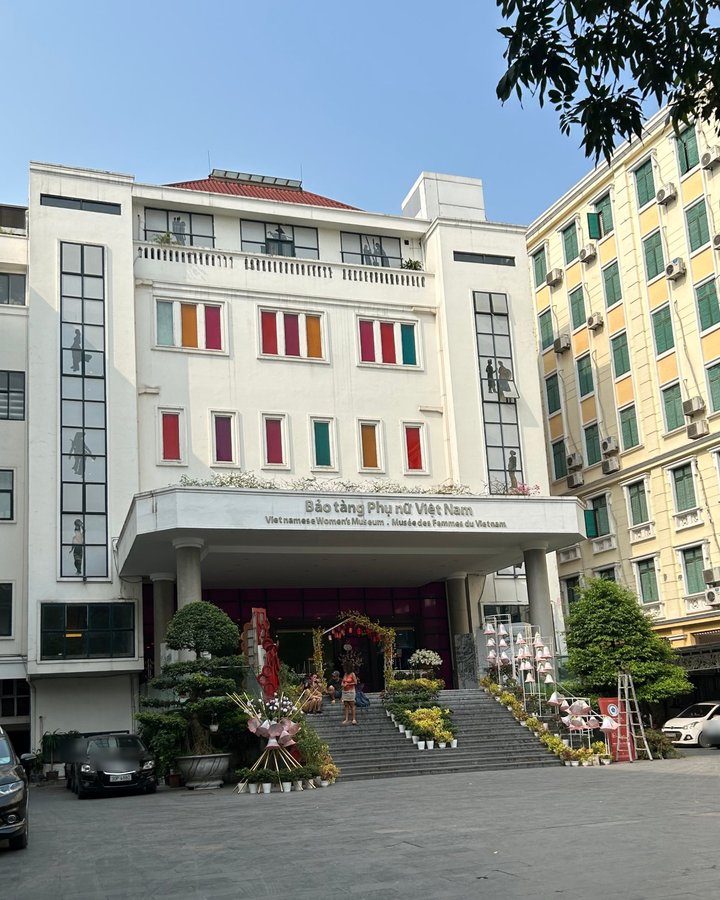
Hanoi was the first city I visited in Vietnam, from it's abominable road-traffic etiquette, the vibrant boutique shops, the smell of the Bahn Mi baguette stalls, all mixed with its history and relations with French colonialism which makes it the perfect home for creative artistry.
In the capital, amongst it's thousand year old culture, there lies a museum, full of influences from the rest of South East Asia, China and France.
This museum is called 'Bảo tàng Phụ nữ Việt Nam' which directly translates to the 'Vietnamese Women's museum'.
The museum represents women's roles in Vietnamese history, in their families, and how they helped during Vietnamese hardships.
The entrance of the museum has a grand façade, with a big open space leading up to the marble staircase.
The name of the museum is written in Vietnamese, English and French, marking the cultural influence Vietnam has had post the French Colonial War.
As you enter the building, there is a central spine of conical hats, starting from the roof of the building to the ground.
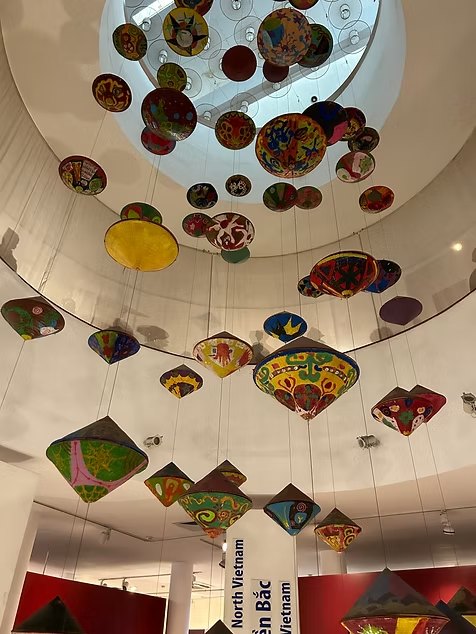
They are known for their uses on farmland to protect women from the sun on the field during work. A magnificent piece to introduce you to the world of Vietnamese art to come.
Here is a video, of women in action wearing these traditional conical hats whilst at work. This video was taken just beneath the Ngoa Long Mountain.
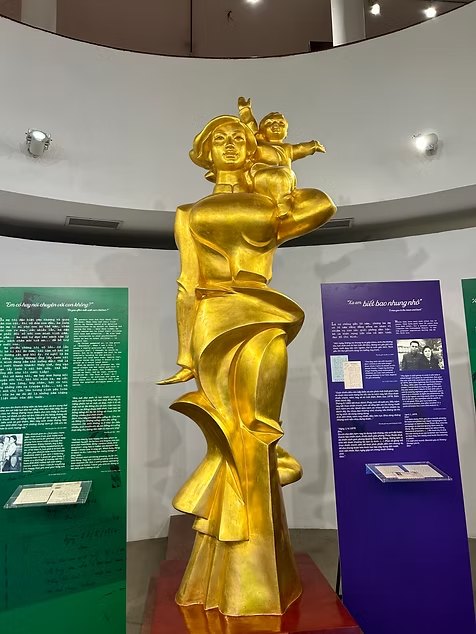
The Mother and Child statue is the centre piece of the ground floor and gives visitors a warm welcome.
The statue supposedly captures the essence of Vietnamese motherhood: strength, affection and loyalty to her family.
The women's textile section, showed intricate designs for costumes, and traditional wear.
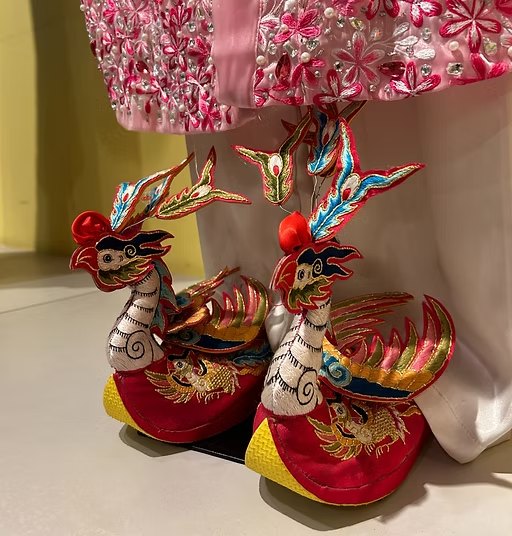
The detailing was very unique to Vietnamese culture.
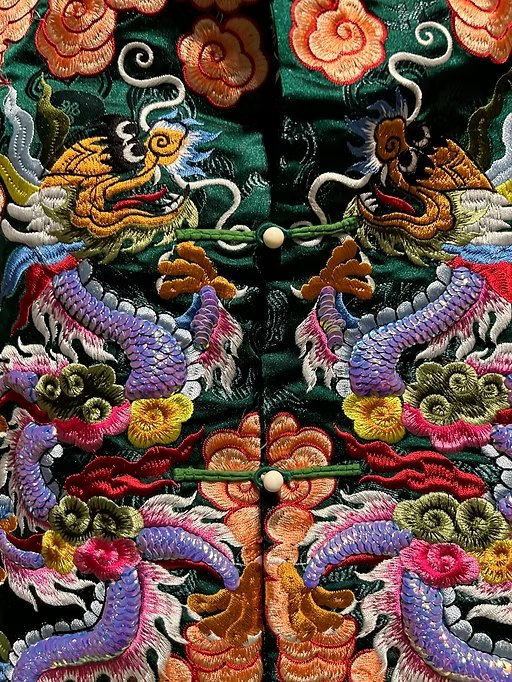
The colours were vivid and contrasting, with shiny gold and silver lining. Some costumes were embezzled with jewels and pearls, adding a royal touch.
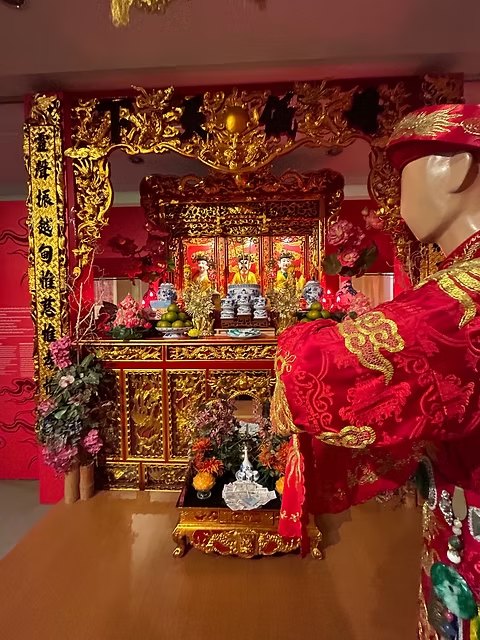
We learnt that the Vietnamese primarily follow a folk religion, characterised by worship to different divine beings, spirits, and ancestors.
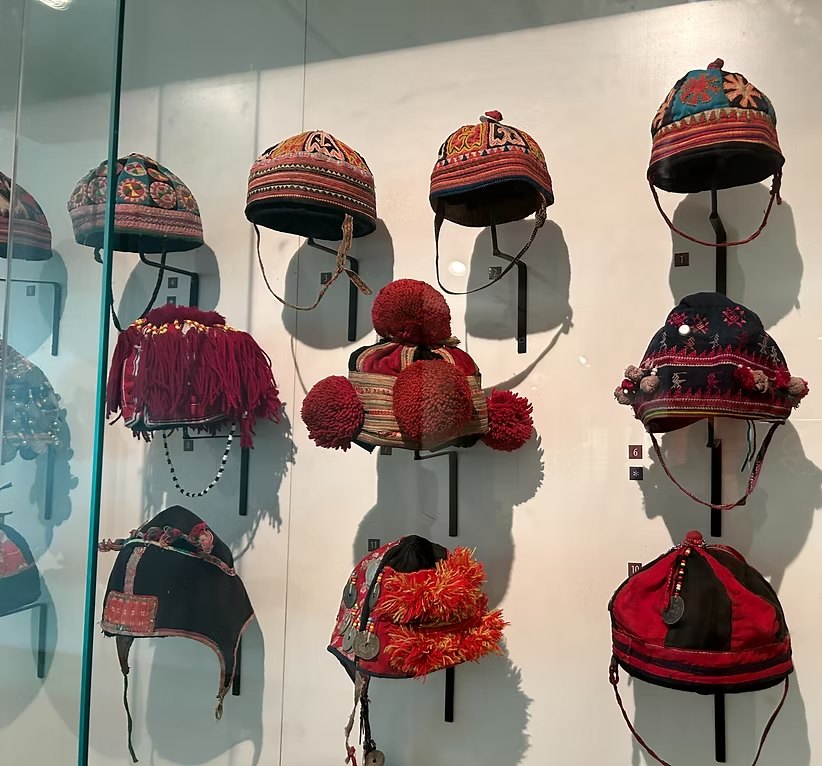
These hats were made for children, adorned with pendants and amulets, to ensure children's protection from evil spirits.
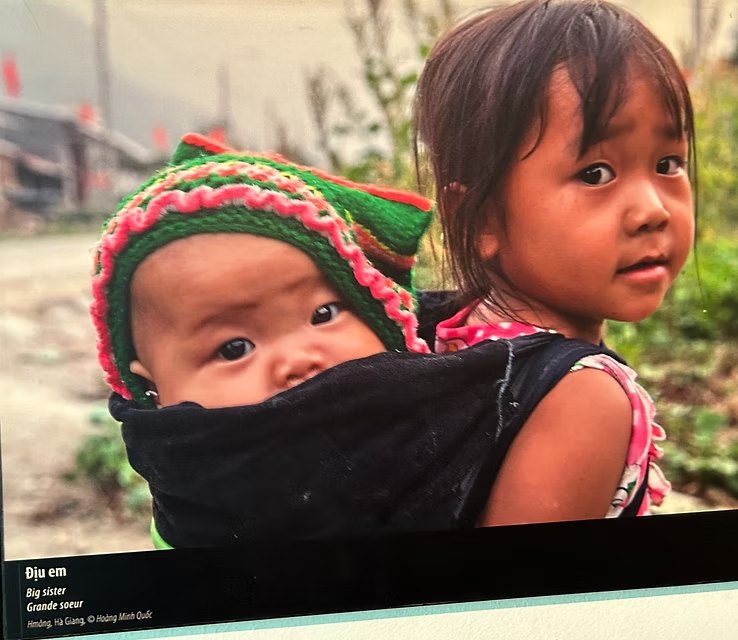
As someone who was born in 2005, seeing these photographs of babies in the same year as me was eye-opening.
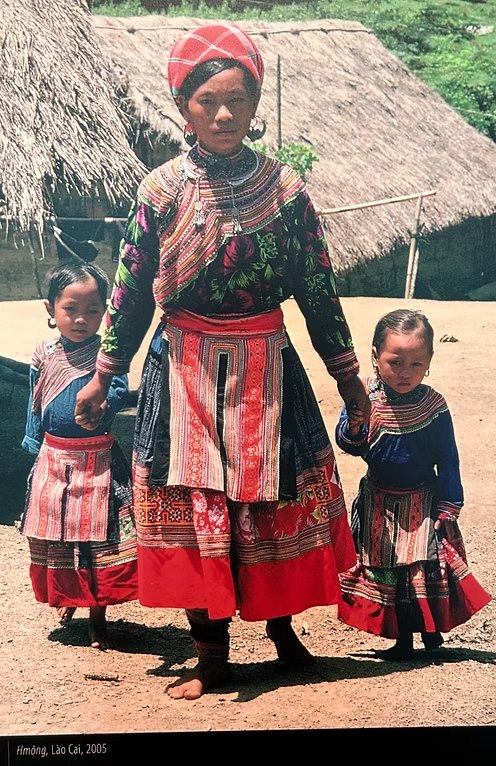
To see children having a completely different experience in life was interesting to see, and it also raised questions in my mind as to what these children were doing now.
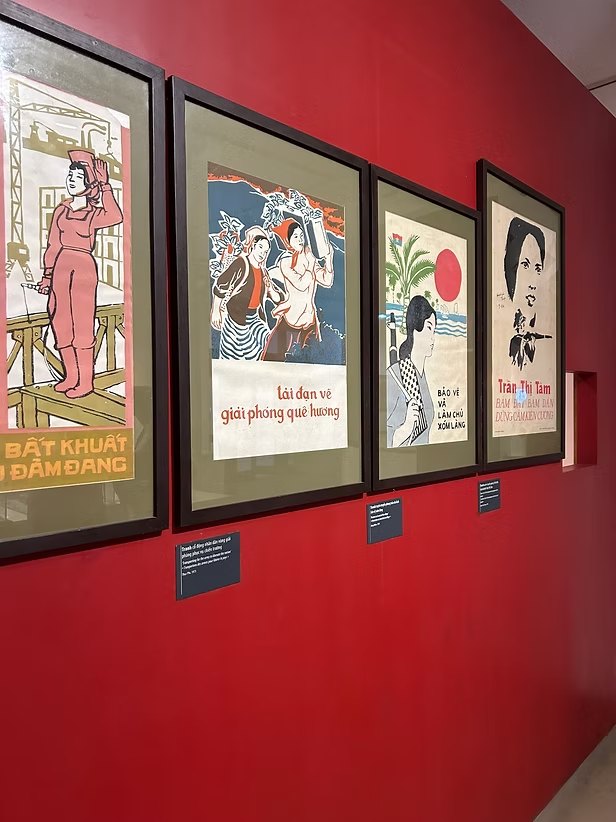
In villages, Vietnamese women also created a popular army called 'The Guerrillas'. They were founded to fight against enemy raids and to destroy enemy posts.
Nationally, 980,000 Vietnamese women participated as guerrilla forces.
This group fought 680 battles and destroyed 13 enemy posts. During the resistance war, twelve guerrilla women were awarded the 'Hero' title.
Visiting this museum was empowering, and showed me the experiences of women and the incredible things they achieved, defying gender norms.
Vietnamese women were warriors who were also incredible mothers.
They experienced a difficult life very early on, and had many more responsibilities than the average Western child.
These women were at the forefront of the development of Vietnamese culture, and I left with a proud feeling to be a woman.
I found inspiration to create more feminist art and incorporate more of my experiences as a woman in the work I make to represent this feeling.